



The Tesla Model Y brings efficiency and modern tech, but it comes with trade-offs in ride comfort, build quality, and interior usability when compared to a full-size luxury SUV like the Cadillac Escalade. A side-by-side look at Tesla Model Y downsides vs Cadillac Escalade highlights differences in space, capability, driving comfort, and real-world performance, especially for drivers weighing a compact EV crossover against a full-size luxury option.
Crestview Cadillac is here to help you navigate those differences with confidence. Our team is committed to supporting you with everything from vehicle sales to service and genuine parts. Whether you are researching your next Escalade or need expert care for your current vehicle, we are ready to assist. Give us a call or contact us today to get started.
What Are the Core Differences Between the Tesla Model Y and a Full-Size SUV Like the Escalade?
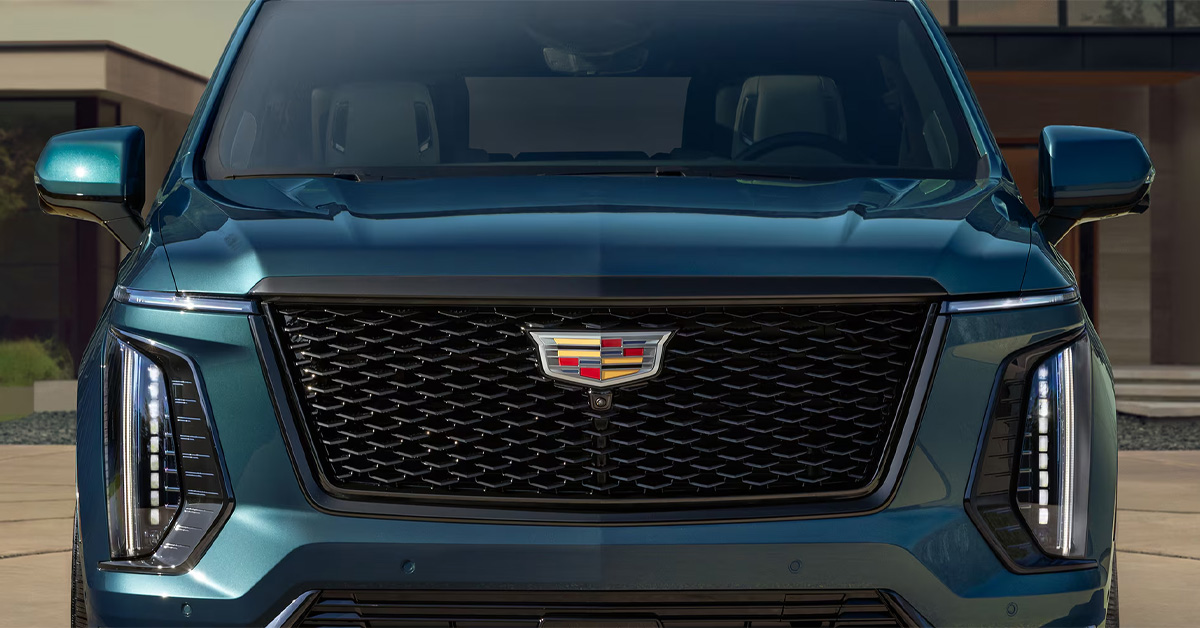
At a glance, the difference comes down to size, purpose, and experience. The Tesla Model Y is a compact electric crossover designed for efficiency, tech-forward driving, and everyday commuting. In contrast, the Cadillac Escalade IQ represents a full-size luxury SUV built for space, comfort, capability, and a more traditional premium driving experience.
When comparing the Tesla Model Y’s downsides vs. the Cadillac Escalade, the contrast becomes clear in how each vehicle is designed to serve a different kind of driver.
Size and Interior Space
One of the most noticeable differences is the interior room.
- The Model Y prioritizes a compact footprint, making it easier to maneuver and park in tight areas
- The Escalade offers expansive seating for up to seven or eight passengers, with generous legroom in all three rows
- Cargo space in the Escalade is significantly larger, especially for families, road trips, or bulky gear
For drivers in busy suburban areas or anyone with a growing family, this difference alone can shape the entire ownership experience.
Driving Experience and Comfort
The driving feel of each vehicle is very different.
- The Model Y is designed to feel quick and responsive, with a focus on efficiency
- Some drivers notice a firmer, less forgiving ride, especially on rough roads or potholes
- The Escalade, on the other hand, emphasizes smoothness and stability, delivering a more cushioned and composed ride
This contrast is often where the Tesla Model Y’s downsides vs the Cadillac Escalade become most apparent. The Escalade leans into comfort and refinement, while the Model Y leans toward performance and efficiency.
Technology and Interior Design
Both vehicles offer advanced technology, but they approach it in different ways.
- The Model Y relies heavily on a central touchscreen with minimal physical controls
- The Escalade combines a massive curved display with more traditional usability and a luxury-focused layout
- The Escalade also offers more tactile features, such as available rear-seat entertainment and premium materials
For some drivers, the Model Y’s minimalist approach feels modern and clean. For others, it can take time to adjust and may feel less intuitive in daily use.
Capability and Everyday Versatility
Another key difference lies in what each vehicle can handle.
- The Model Y is well-suited for commuting, city driving, and shorter trips
- The Escalade is built for heavier-duty use, including towing and long-distance travel
- With its larger frame and stronger capabilities, the Escalade supports a wider range of real-world needs
This is especially important for families who need a vehicle that can handle more than just daily errands.
Why Do Tesla Model Y Downsides Stand Out in Build Quality and Ride Comfort?
When drivers compare Tesla Model Y downsides vs Cadillac Escalade, two areas tend to stand out right away: build quality and ride comfort. These factors play a big role in how a vehicle feels every day, especially on longer commutes or rougher roads.
The difference becomes clear once you look at how each vehicle is built and what it is designed to deliver.
Build Quality and Fit and Finish
The Model Y focuses heavily on innovation and performance, but some owners and reviewers point out inconsistencies in its build quality.
Common concerns include:
- Uneven panel gaps or minor alignment issues
- Paint imperfections or surface inconsistencies
- Occasional interior rattles or creaks over time
While these issues do not affect every vehicle, they are often mentioned when discussing the Tesla Model Y downsides vs. the Cadillac Escalade. Attention to detail in materials and assembly can shape how “premium” a vehicle feels over time.
On the other hand, the Cadillac Escalade IQ is built with a strong emphasis on craftsmanship and refinement. The Escalade’s interior often feels more traditional in the luxury sense, with:
- High-quality materials and soft-touch surfaces
- Solid door closures and a more substantial feel
- Consistent fit and finish throughout the cabin
For drivers who value that sense of durability and polish, the Escalade stands out as a more refined option.
Ride Comfort and Everyday Driving
Ride quality is another major point of comparison.
The Model Y is known for its sporty handling, but that comes with trade-offs:
- Firmer suspension can feel stiff on uneven roads
- Road imperfections are more noticeable in the cabin
- The ride may feel less forgiving on longer drives
For daily driving, especially in areas with rough pavement or frequent stop-and-go traffic, this can become more noticeable over time.
In contrast, the Escalade is designed with comfort in mind:
- Smooth, cushioned ride quality
- Better absorption of bumps and road imperfections
- A quieter and more composed driving experience
This difference is especially important for families or anyone who spends a lot of time on the road. A smoother ride can make long trips feel far less tiring.
How Do Interior Space and Usability Compare Between the Model Y and the Escalade?
When comparing Model Y vs full-size SUV trade-offs, interior space is one of the most important factors to consider. What looks compact and easy to maneuver on the outside can feel very different once you’re inside with passengers, cargo, and everyday gear.
The Cadillac Escalade IQ takes a very different approach, prioritizing maximum space, flexibility, and comfort for both drivers and passengers.
Passenger Space and Seating Comfort
The Model Y offers practical seating for a compact SUV, but it can feel tight depending on your needs.
- Seating is best suited for four adults, with limited comfort for a full five-person ride on longer trips
- Third-row seating (when equipped) is tight and better for short trips or children
- Rear headroom can feel restricted due to the sloped roofline
In contrast, the Escalade is designed to carry passengers with ease:
- Spacious three-row seating with generous legroom in all positions
- Comfortable seating for adults in the third row
- Available premium seating options that enhance long-distance comfort
For families in busy areas or anyone carpooling regularly, that extra space makes a noticeable difference in day-to-day usability.
Cargo Space and Practical Use
Cargo capacity is another area where the Model Y vs full-size SUV trade-offs become very clear.
In the Model Y:
- Cargo space is sufficient for daily errands or small trips
- The sloping rear design can limit taller or bulkier items
- Folding seats help, but total capacity remains limited compared to larger SUVs
In the Escalade:
- Large, flat cargo area designed for bigger loads
- Easy to fit luggage, sports equipment, strollers, or even furniture
- Extended ESV models offer even more storage for long trips or larger families
Interior Layout and Everyday Usability
Usability is about more than space. It is about how easy it is to live with the vehicle every day.
The Model Y focuses on simplicity:
- Minimal physical controls, with most functions handled through the touchscreen
- Clean, modern interior with fewer distractions
- Can take time to get used to, especially for new users
The Escalade offers a more traditional and intuitive layout:
- Physical controls combined with advanced digital displays
- Larger, more accessible cabin features
- Designed for ease of use for drivers and passengers of all ages
Does the Minimalist Design of the Model Y Create Usability and Safety Concerns?
Minimalism is one of the defining traits of the Model Y, but it also raises important questions when it comes to usability and safety. For many drivers, especially those considering family EV crossover downsides, the lack of physical controls can take some getting used to. What feels modern to one person may feel inconvenient or distracting to another.
In contrast, a vehicle like the Cadillac Escalade IQ takes a more traditional approach, blending advanced technology with familiar controls that are easier to operate without taking attention off the road.
Usability and Learning Curve
The Model Y relies heavily on a central touchscreen for nearly all controls.
- Adjusting climate, mirrors, and even driving settings often requires navigating menus
- There are very few physical buttons or tactile controls
- New drivers may need time to learn where everything is located
This can create a learning curve, especially for drivers who are used to more traditional layouts. In everyday situations, such as adjusting the air conditioning or changing a setting quickly, it may require more focus than expected.
The Escalade, on the other hand, offers:
- A combination of touchscreen and physical controls
- More intuitive access to key functions
- A layout that feels familiar to most drivers right away
This balance can make daily driving feel more natural and less distracting.
Safety Considerations and Driver Focus
Safety is always a top priority, and design plays a big role in how easily a driver can stay focused on the road.
With the Model Y:
- Key functions are controlled through the touchscreen
- Drivers may need to look away from the road to make adjustments
- This can be more noticeable during heavy traffic or long drives
For some drivers, this contributes to the broader conversation around family EV crossover downsides, where convenience and safety must be carefully balanced.
With the Escalade:
- Important controls are easier to reach and operate by feel
- Drivers can keep their attention on the road more consistently
- Advanced driver assistance features are integrated alongside familiar controls
This approach can feel more reassuring, especially for families or drivers who spend a lot of time navigating busy roads.
How do Technology and Driver Assistance Differ Between the Model Y and the Escalade?
Technology is a major reason many drivers consider modern SUVs, but not all systems are designed the same way. When looking at Tesla Model Y downsides vs Cadillac Escalade, the difference comes down to how technology is delivered and how it supports the driver in real-world situations.
Both vehicles offer advanced features, but they prioritize very different experiences behind the wheel.
Driver Assistance Systems
The Model Y is known for its Autopilot system, which focuses on automation and driver support through software.
- Lane keeping and adaptive cruise control are handled through a camera-based system
- Features rely heavily on software updates and ongoing improvements
- Some drivers report inconsistent behavior in certain conditions, such as sudden braking or hesitation
The Cadillac Escalade IQ takes a different approach with its available Super Cruise system:
- Hands-free driving on compatible highways
- Clear driver monitoring to ensure attention stays on the road
- Smooth, predictable performance designed for long-distance travel
For drivers who frequently commute or take road trips, this difference can shape how confident and relaxed they feel using driver assistance features.
Display and Interface Experience
Inside the cabin, the way information is presented also varies significantly.
The Model Y keeps everything centralized:
- One main touchscreen controls nearly all vehicle functions
- No traditional instrument cluster in front of the driver
- Minimalist layout that prioritizes simplicity
The Escalade expands on that concept with a more immersive setup:
- Large, curved display spanning the dashboard
- Dedicated areas for driver information, navigation, and entertainment
- A combination of digital and physical inputs for easier interaction
This setup allows drivers to access important information quickly, without needing to search through menus.
Connectivity and Everyday Convenience
Connectivity plays a big role in how technology fits into daily life.
With the Model Y:
- Built-in system with limited smartphone integration options
- No Apple CarPlay or Android Auto support
- Strong reliance on Tesla’s native interface
With the Escalade:
- Broader smartphone integration options
- More flexibility for connecting devices and apps
- Rear-seat entertainment and premium audio options for passengers
For families or anyone who shares their vehicle often, this added flexibility can make a noticeable difference.
What Are the Range, Charging, and Real-World Driving Downsides of the Model Y?
Electric driving brings clear advantages, but it also introduces a different set of considerations. When looking at daily usability, the Model Y can present a few challenges related to range, charging time, and how it performs in real-world conditions. These factors often come into focus when comparing it to a full-size SUV like the Cadillac Escalade IQ, especially for drivers who rely on consistency and flexibility.
Range in Everyday Conditions
On paper, the Model Y offers a competitive range. In real-world driving, that number can vary more than some drivers expect.
Common factors that affect range include:
- Cold weather, which can significantly reduce battery efficiency
- Highway driving at higher speeds
- Use of climate control and other in-cabin features
For example, a driver heading out early on a colder morning may notice a quicker drop in estimated range than expected. Over time, these fluctuations can require more planning, especially for longer trips.
Charging Time and Convenience
Charging is another key part of the ownership experience.
The Model Y benefits from a well-known charging network, but there are still practical considerations:
- Charging takes longer than a traditional fuel stop
- Availability of chargers can vary depending on location
- Planning stops becomes part of longer trips
Even with fast charging, a quick five-minute stop is not always possible. For drivers with busy schedules, this can feel like a limitation.
By comparison, a traditional SUV, such as the Escalade, offers:
- Quick refueling at widely available gas stations
- No need to plan routes around charging locations
- More flexibility for spontaneous trips
A Quick Comparison
- Model Y
- Efficient and fully electric
- Range can vary in real-world conditions
- Charging requires planning and time
- Escalade
- Consistent performance across conditions
- Fast refueling with no range anxiety
- Ideal for long-distance travel and flexibility
What are the practical downsides of selecting a Model Y instead of a full-size Cadillac Escalade for family and towing needs?
The Model Y offers less passenger space, limited towing capability, and reduced cargo flexibility compared to a full-size SUV, which can make it less suitable for larger families or heavier hauling needs.
How do cargo capacity and third-row seating limitations on the Model Y matter for large families?
The Model Y’s smaller cargo area and tighter third-row seating (when equipped) can limit comfort and storage space, making it challenging for larger families to travel with passengers and luggage at the same time.
Which travel and towing scenarios expose the Model Y’s limitations compared with an Escalade?
Long road trips, towing heavier trailers, and carrying multiple passengers with gear can highlight the Model Y’s limitations, especially due to reduced towing capacity and the need for more frequent charging stops.
Are there cost or insurance differences that make the Model Y a less suitable family choice?
The Model Y can have higher insurance and repair costs due to its advanced technology and EV components, and repair expenses may also be higher compared to traditional full-size SUVs like the Escalade.
How do service availability and repair timelines compare between Tesla and Cadillac for these use cases?
Tesla service can involve longer wait times and fewer service center locations, while Cadillac benefits from a more established dealer network, which can make service and repairs more accessible and potentially quicker for family needs.
Elevate Your EV Experience With A Cadillac Escalade
Comparing Tesla Model Y downsides vs. Cadillac Escalade shows how much space, comfort, and capability matter for families and daily use. From long road trips to everyday errands, these differences affect how you experience your drive and how much room and versatility you really have.
Drivers from Azusa, Glendora, Duarte, and San Dimas are invited to explore a wide selection of vehicles, including the Escalade, at Crestview Cadillac. Each model offers luxury, technology, and performance designed to fit your lifestyle and provide confidence on the road.
If you want to keep learning about Cadillac and Tesla comparisons, you can explore Model 3 vs Escalade IQ,Model 3 vs Escalade comparison, and Model 3 vs Optiq comparison to see how these vehicles stack up in real-world driving.
Whether you are ready to upgrade or just exploring your options, Crestview Cadillac is here to help. Contact us today or visit us to experience luxury, space, and advanced technology firsthand.
Get Directions to Crestview Cadillac
Disclaimer: All information is provided for general informational and entertainment purposes only. While we strive for accuracy, we cannot guarantee that all content is complete, current, or error-free. Any reliance you place on such information is strictly at your own risk. This article may include opinions and is not endorsed by, or officially affiliated with, any vehicle manufacturer or brand. Always consult official sources – such as the vehicle’s owner’s manual, authorized dealerships, or certified professionals – for the most up-to-date and personalized information.
Connect with us


- July 2026
- May 2026
- April 2026
- March 2026
- February 2026
- January 2026
- December 2025
- November 2025
- October 2025
- September 2025
- August 2025
- July 2025
- June 2025
- May 2025
- April 2025
- March 2025
- February 2025
- November 2024
- October 2024
- September 2024
- August 2024
- July 2024
- June 2024
- May 2024
- April 2024
- March 2024
- February 2024
- January 2024
- December 2023
- November 2023
- October 2023
Archives
Categories